I am not a huge fan of Disney-type cartoons. I mean Beauty and the Beast, Cinderella, Bambi, etc are all classics that I love. But the newer ones from the “Frozen Era” just don’t resonate with me. Toy Story, and the sequels, are exceptions to that. But the other one that passes muster for me is “CoCo”. For those of you who have not seen it, Coco is the story of a young Mexican boy named Miguel. Miguel loves music and his favorite singer is Ernesto de la Cruz. A larger than life, full of himself, mega star. Miguel’s family, however, is anti-music and forbids Miguel from performing. A turn of events leads Miguel into believing Ernesto is his great-great grandfather who Miguel’s relatives believe abandoned his wife and daughter to make a career in music. Ernesto’s magic guitar transports Miguel to the land of the dead to find Ernesto and get his blessing to perform his music. In the end, Miguel learns that Ernesto is a fake who poisoned his real great-great grandfather, Hector, in order to stop Hector from returning to his family. Ernesto steals Hector’s guitar and songs to become a star. When the truth is revealed Hector is returned to being an honored member of the family’s history and Miguel goes on to perform his music.
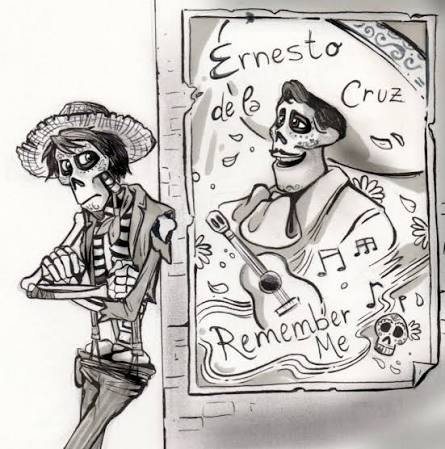
In this story, the character of Ernesto de la Cruz will do whatever it takes, including theft, forgery and murder to obtain stardom. He relies on his achievements to attain what he considers to be success. But it is Hector and Miguel that learn that it is respect of family, history and tradition that supersedes the false glory that comes from relying on your own abilities and skills Ernesto loses everything he wanted while Hector and Miguel gained what truly mattered. In Paul’s letter to the community in Corinth that is our first reading today, he goes out on a limb by referring to his congregants as being weak, not of noble birth and not wise. His point is that if they achieve glory by following the Lord, while being the lowly of society, it will serve to shame the rich and the powerful who choose wordly recognition over the Lord.
And what is the point of this revelation? Because if the poor and lowly of the world can achieve salvation in Christ, then it shows that this salvation does not come at our own doing. It demonstrates that eternal life is a gift from God that we either choose to accept or reject. We therefore cannot boast before others about our relationship with God. It removes pride in our own abilities and puts humility front and center. In the movie, Hector merely wanted to go home to be with his family, putting his music second. Ernesto, on the other hand, lived as if it was all up to him and his fame would take precedence over what truly matters.
In another movie reference, in Fiddler on the Roof, the character Perchik offers to teach Tevye’s family in exchange for food and housing. Perchik makes the bold proclamation that be a very good teacher. Tevye’s daughter, Hodel, gives him a dose of humility with the line:
“I heard that a rabbi who must praise himself has a congregation of one”
God does not call the equipped. He equips the called. May our primary focus be on answering God’s call to follow Him. Not because we have some special skills that very few posses. But because we remain fixed on life in eternity with Him.
