I go out to eat at restaurants fairly often. Mostly when I am traveling on motorcycle tours. We hit restaurants for breakfast, lunch and dinner. I have been trying to tell myself that when you eat out at restaurants, the calories don’t count. I think I might have a food allergy, however, Every time I eat out at restaurants it seems like my waistline swells up. There is something I try to do on a consistent basis when eating out. I try to always bow my head in prayer. I used to try to engage everyone at the table but thought it best to just pray on my own and model for others. At least that’s what I tell myself. In fact, I think it is more that I do not want get into conflict by asking others to pray. Especially if I don’t know what their faith background is. A bit of a practical reason but I think it can be a bit of embarrassment as well. I have no issue praying visibly on my own. I also don’t have any concerns reading the bible in public or discussing it if asked. But to just unilaterally bring up Jesus in conversation? No…not my style.
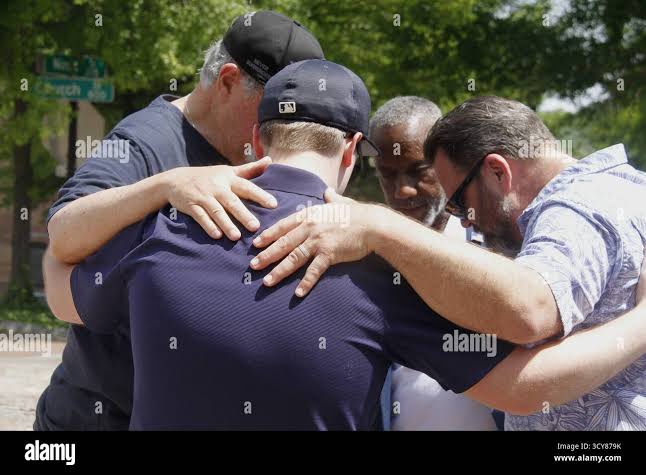
Here’s the problem. This is what Jesus tells us in the Gospel of Luke:
“I tell you, everyone who acknowledges me before others
the Son of Man will acknowledge before the angels of God.
But whoever denies me before others
will be denied before the angels of God.“
How do we go about acknowledging God? Well, not by failing to invite others to prayer, that’s for sure. But what are some tips for showing your belief in God in public without being intrusive? The classic notion of denying our faith often involves some type of martyrdom where someone is threatening our lives unless we deny our belief in Christ. But for most of us, there are more subtle examples of either acknowledging or denying Christ in our daily lives. Here are a few that I found when researching the topic:
Prayer in public – Not only saying grace before meals, but also offering to pray for someone, right then and there, who just told you that they were having issues or were in a crisis situation.
Speaking with grace and kindness in stressful situations
Volunteer joyfully. Helping someone with some difficult tasks without them asking you.
Walking away when faced with gossip or speaking untruly to someone about another person.
Display Christian symbols such as wearing a crucifix or displaying a Christian bumper sticker. I love the line that asks if you could be convicted of being a Christian based on what is displayed around your home.
What about examples of denying Christ in public?
Hiding your beliefs in order to fit in with some group.
Laughing along when someone mocks Christian beliefs or making fun of your Catholicism
Using God’s name in vain
Denying Christian beliefs or denying being a Christian.
Choosing honor, power, pleasure or wealth over living ethical Christian standards.
But even if we have made it a pattern to deny Christ in these circumstances, he pledges to forgive the penitent sinner. No matter what we do or say against Him, He is always ready to welcome us back. No sin is too big or too small that we cannot ask the Lord to show mercy towards us. But in today’s Gospel Jesus makes an exception to this rule of forgiveness:
“Everyone who speaks a word against the Son of Man will be forgiven,
but the one who blasphemes against the Holy Spirit
will not be forgiven.“
Wow. I thought we would be forgiven any sin. Isn’t that what I just said above? What does it mean to blaspheme against the Holy Spirit? Essentially blaspheming against the Holy Spirit involves:
A permanent, conscious rejection of God’s truth and grace, resulting in a seared conscience that refuses to repent. Also if a person completely shuts out the Spirit’s convicting power, making forgiveness impossible only because they refuse to seek it.
If a person worries that they spoke ill against the Holy Spirit then it is likely that they are not guilty of this sin since they obviously have concern regarding their relationship with God and the Spirit. I think it all comes down to the simple basic commands Jesus spoke in the Gospels. All the laws, the prophets and the commandments boil down to just two: Love the Lord your God and Love your neighbor as yourself. When we think of God as our neighbor than all condenses to even just the part about loving your neighbor.
There is a story in Judaism about Rabbi Hillel, who lived during the first century BC. The story goes that a skeptical, and apparently sarcastic, Gentile asks Hillel if he could teach him the entire Torah while standing on one foot. Hillel responded, “What is hateful to you, do not do to your neighbor. That is the whole Torah, all the rest is commentary. Go, learn it.”
