I don’t speak French. Now I am sure that this is not a handicap that grants me much sympathy in the United States. It would be like complaining to someone in our rural area of Pennsylvania that I was having a difficult time finding a good bowl of Coq au Vin in Mainesburg (just FYI…I have no idea what Coq au Vin is). So the lack of ability to speak in the tongue of Napoleon has not really been an impairment for the most part. I still struggle at times just speaking English.
However, being in Senegal this last week, it has become clear that not being bilingual has its disadvantages. I can’t order food, find a bathroom, ask directions or watch television. Every channel is in French. No Chicago Bears football here! Of course, after their performance against the Green Bay Packers last Sunday, I believe I was spared significant pain. So, overall, without Elise being by my side constantly, I am lost.
Which brings me to the challenges of going to Mass. We do try to make services when we are here. When we are not causing too much chaos in my daughter’s 6 person family by asking them to get us to Church. The services, as you would expect in this former French colony, are all in French. One of the advantages of being Catholic is that no matter where you attend Mass in the world, the structure is always the same. Even though you have no clue what is being said, you can still follow along. And the Eucharist? Well, it is the Eucharist wherever you go. It is the central part of the service. After all, Mass is called the Eucharist because of Christ’s real presence. Plus Eucharist means “Thanksgiving”. It is what we literally are doing by attending Mass each week. The music could be off key (which it is definitely not in African worship, BTW), the sermon could be less than noteworthy and there could be crying children. But we still have Jesus with us in body, blood, soul and divinity.
Here is the thing about the language spoken during Mass. Since Vatican II we primarily worship in the vernacular. In the native language of the country in which the church is located. That has not always been the case. Before V II (cool way of saying Vatican II), as most of your know, all services were in Latin. No matter where you were in the world. Now there are pros and cons to this. The obvious Pro is that not knowing the language of the country did not prove to be a hurdle. The language was universal. The cons? Well, most people did not know Latin and the service became a spectator sport. We watched as the priest conducted the service somewhat in private. I am not bashing the Traditional Latin Mass here…at all. I think the TLM has brought many people back to the faith and has also enriched worship for many. It should remain an option for Catholics, IMHO. But it is a different service. Also, celebrating the Mass in the vernacular. I think, has created more of a sense of community in many places as the congregants seem to maintain their cultural perspective. It is less foreign in a way as it seems the imposition of a language that they don’t relate to can be.
The first reading today comes from the book of Sirach. The book is also know as the Wisdom of ben Sirach (The Wisdom of the son of Sirach) and as Ecclesiasticus (not the same as the book of Ecclesiastes). At the time of its writing, Greek tradition and culture was taking over the young people of Israel. Greek music, Greek literature and Greek traditions were turning Jerusalem into a Greek city-state. And many people were becoming hungry for more. To the point that they were forgetting their Hebrew roots and their Jewish faith. The secular world held all the cards. Sound familiar? So the writer of Sirach had a mission. To remind the people, especially the young people, of where they came from so that know better where they were going.
And one of the ways this was initially accomplished was the language the book was first written in. While Greek was the language of the land at the time, Sirach was written in Hebrew. The language of the people. The passage today focused on the Prophet Elijah. It highlighted all his strengths and powers. Calling down fire, raising the dead and riding up to heaven in a flaming chariot. You can almost imagine the story being written as an edition of Marvel Comics. It was meant to inspire a better awareness among the people of Israel of their history. And it was done so…in the vernacular.
It is said that one of the ways an invading force subdues the people of the country they are invading is to eliminate their language. To impose the invading army’s language, and thus their culture, on the new subjects. We saw it in the Old Testament when the Israelites were enslaved in Egypt for 400 years. Many had adopted Egyptian worship and culture…to the point that some wanted to return to the bondage of Pharaoh rather than remain free, and Hebrew, in the desert. And when the Babylonians took the Hebrews out of Judah and into Babylon, it became home to many after only 70 years. And many decided to remain instead of going back to Jerusalem to rebuild the temple.
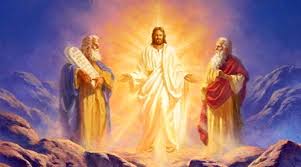
And more directly related to the readings today, this re-connection with Elijah made possible by Sirach was instrumental in the Apostle’s understanding of Jesus. Prior to the Gospel passage we have today from Matthew, we see Christ taking His inner circle up to Mount Tabor. There He is transfigured and appears alongside Moses (representing The Law) and Elijah (representing the prophets). Being good Jews, Peter, James and John know that Elijah must come before the Messiah. They are primed for it…at least partially from Sirach. So they ask Jesus about this prophecy. When will the great and powerful…no, I was not going to say Oz…Elijah come. Jesus confirms that, yes, Elijah must come as predicted by Isaiah. But, he has already come. One crying out in the wilderness, dressed in camel’s fur and eating locusts and honey. He has already come. They recognize that Jesus is referring to John the Baptist. The final prophet. And because Sirach told them in a language they could identify with, we can all assume that their response to Christ was not “It’s Greek to me”
