I suspect that many of you had a similar early life experience as I had. I lived at home with my parents until I graduated high school. I then left for Illinois to go to college at Southern Illinois University. Then moved up to the University of Illinois for vet school and then to Pennsylvania for 4 years. Then back to Illinois to a small home for 4 years (funny how school seemed to get me into a 4 year moving cycle) before settling into our home in Carol Stream for the next 32 years. Sedentary to a wanderer and back to sedentary life and back to wandering in our latest move to Pennsylvania. It seems as though our nature is to yearn at times to see what the rest of the world has to offer but the need for stability and purpose drives us to lay down roots at times. Exploration vs Community. I have felt that push and pull for most of my life.
In the first reading today from Exodus we hear of Moses leaving Egypt, the city of Ramses, with 600,000 people (not counting the “little ones”). We know that after 40 years of wandering they end up in the land of Canaan. A land they occupied during the lives of Abraham, Isaac and Jacob for many generations before having to leave and live in Egypt during the great famine. The Bible tells us they remained there for 430 years before leaving in search of a land flowing with milk and honey…Canaan.
But is was their first stop in leaving Ramses that I found to be interesting. I hope you will indulge me in this reflection as I cannot resist a biblical history lesson. Our reading today tells us that Moses and the Israelites stopped at Sukkoth after leaving Ramses. A seemingly insignificant fact. Ah, but if we look a bit deeper, we will see a connection with Jesus and the Transfiguration.
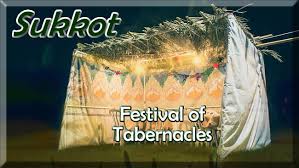
When Jacob obtained his Father Isaac’s blessing in place of his older brother Esau, he had to flee Canaan to avoid being killed by his brother. He winds up in the land of his relative Laban where he becomes prosperous and finds his wives among the daughters of Laban. As he returns to Canaan with his possession and family he stops and erects booths for his cattle. He names the land, Sukkoth. The name Sukkoth means booths or tabernacles. It is here that Moses initially stops after leaving Ramses to pick up additional Israelites before entering the desert.
The Bible says that Sukkoth is in the land of the tribe of Gad, named after one of Jacob’s twelve sons. It is east of the Jordan river. When Moses and the Israelites finally reach the Jordan and are ready to cross into Canaan, it is the tribe of Gad that asks Moses to remain and not cross into Canaan. After helping Moses take possession of Canaan, they return to the area east of the Jordan and to Sukkoth.
Now to Jesus. If you recall, when Jesus climbed Mt. Tabor with Peter, James and John and experienced the Transfiguration, it was Peter who suggested that they build three booths, or tabernacles, to house Jesus, Moses and Elijah. It is likely that Peter made this proposal because they had been celebrating the Feast of the Tabernacles or SUKKOTH during the time they climbed the mountain and witnessed Jesus’ transfiguration. So when we celebrate the Feast of the Transfiguration we are also, in a way, remembering the Exodus from Egypt (the basis for the celebration of Passover) and we are celebrating the Festival of Sukkoth. Remembering Moses first stop in the desert, Jacob’s return to his home and reconciling with Esau, and the crossing of the Jordan into Canaan. Where they settled after 40 years of wandering in the wilderness.
It is also a time to remember that we are wanderers here on our journey on earth. Whatever time we have here is only temporary. It is merely a journey to a permanent home. Just as the disciples on the road to Emmaus were wandering away from Jerusalem until joined by Jesus. We wander until we allow the Good Shepherd to guide us on our journey until we cross the Jordan ourselves and dwell forever in the eternal Canaan. Wandering no more.
