Elise and I attend a synagogue in Williamsport, Pennsylvania. I want to make a distinction here about calling where we go, a synagogue and not a temple because it is significant when I discuss today’s first reading. A synagogue is a house of worship. A place of study. It is not really a temple. A temple is a place, at least in the context of Judaism, of sacrifice. Where animals are ritualistically killed for the purpose of wiping clean the sins of the people. These sacrifices were done daily and at times of major Jewish festivals such as Passover and Yom Kippur. When the temple in Jerusalem was destroyed in 70 AD, sacrifice was no longer possible and, as a result, Jewish worship pivoted to scholarly learning of the law. Synagogues became the dominant place of study and teaching.
At the synagogue we attend there are student rabbis who officiate because it is hard to get ordained rabbis to live in the remote region of Pennsylvania where we live. As part of the requirement of being a student rabbi, the student must do a research project at the congregation that they are interning at. Our latest student rabbi elected to do a study on how people view prayer. I agreed to be interviewed by Student Rabbi Deborah and one of the things she asked was, “As a Catholic, have you received benefit from your exposure to Judaism” I am paraphrasing a bit but that was the essence of her question.
For those of you who read ACM regularly, many have noted that when I write my reflections I like to focus on the first reading when that reading is from the Old Testament (which can also be called the Old Covenant). I think that tendency is directly due to my exposure to Judaism as I worship with Elise. I like to think sometimes that maybe God put me as a writer at ACM to help to shed some light on Christ’s mission as revealed in the pages of the New Testament (or New Covenant) by highlighting His works in the Old Testament. And I think today’s passage from Deuteronomy is no exception. There is a lot here but I will try to narrow down a bit to avoid boredom.
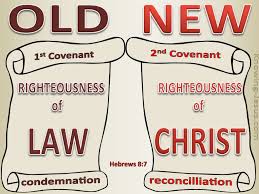
Moses is speaking to the Israelite people just before they are to enter the land of Canaan…the Promised Land. He is once again imploring them to follow God’s commands for their own good. God made an agreement, a covenant, with Abraham and then Isaac and Jacob. He would bless them as a people if they followed His decrees. And what were the goals God had for His people? He commissioned the Israelites to reveal to the world about the One, True God. He also knew that He had plans for the Israelites to deal with the evil that was the tribes of those living in Canaan. Whereas the Israelites sacrificed animals for forgiveness of their sins, those living in Canaan were sacrificing people, often children, to appease their gods. The time in the desert was a time of preparation so that the Israelites, God’s people, would be ready when they entered the Promised Land. To fulfill their end of the bargain…the covenant.
But, as we know, this was not meant to be. Israel not only failed to eliminate the pagans who worshipped in this way, but they in many respects followed in their ways by building altars and pillars to pagan gods. They fell away from God and the result was their capture by the Assyrians and the Babylonians. And here is the thing that is most important. God’s covenant was with the Israelite PEOPLE…as a whole. The sins of one were the sins of the many. The Law, all 613 of them, was applicable to them as a group. And it was the unfaithfulness, the immaturity, of the Israelites that forced God’s hand, I believe, to enact such an elaborate system of laws. It was as if they were children who needed to have strict narrow guidelines to keep them from going astray.
So God gave us a New Covenant. No longer would a system of intricate rules and laws govern our hearts. No longer would the sacrifice of animals be necessary to provide for our salvation. Jesus Christ, the Messiah, became one of us so that he could die for all of us. One sacrifice, once for all. For those who call on Him and ask for His forgiveness and His guidance. While we are a community, this covenant is between God and EACH ONE OF US individually. God speaks to us alone through His Son Jesus and the Holy Spirit. We each get to decide if we are going to follow God’s commands. Or are we going let the gods of this current world…honor, power, pleasure and wealth…lead us. And when we stumble, which we all do, we do not need to go to the local butcher for a goat to sacrifice. We merely need to enter the quiet of a confessional and sincerely say you are sorry. God forgives and we try again.
