One of my favorite scenes from the movie Footloose is when Ren (Kevin Bacon) goes before the town council to plead his case to be allowed to hold a dance in the town. Dancing had been banned at the insistence of the local pastor, Revered Shaw (played masterfully by John Lithgow), as a result of his son, and others, dying in a car accident while returning from a dance. Ren struggles to find a way to promote the dance until the pastor’s daughter, Ariel (not the Ariel of the “Undah the sea” fame), helps Ren find several references to celebratory dancing in the Bible. The council rules against the dance in spite of Ren’s pleading. However, the Reverend consents to the dance being held in a neighboring community in part due to Ren’s persuasive arguments.
Dancing. It has been a part of worship since King David danced when the Arc was brought back into Jerusalem and when the women celebrated David’s military victories. In today’s Gospel, the story of the Prodigal Son, we see dancing and singing in celebration of the Son’s return to his Father. Many years ago our parish in Carol Stream, Illinois dipped its toe into the use of liturgical dance during the Mass. It was a bit out of the parish’s comfort zone as ministers pranced around the sanctuary with a smoking urn allowing the smoke to encircle the congregation. Elise and I dubbed the practice the “pot dance”. I had visions of the Elves from the Hobbit flitting to and FRO around Middle Earth.
Dancing was also part of the celebration the Israelites undertook after they escaped the Egyptian army by crossing the parted Red Sea. Famously, it was Moses and Aaron’s sister, Miriam, who led the way dancing, singing and playing the timbral. What exactly is a timbral anyway? Visions of exotic dancers come to mind. Not that I have seen anything like that personally. In Judaism there is a Sabbath observance called Shabbat Shira. Which means the Sabbath of Song or Celebration. It remembers the crossing of the Red Sea (I refuse to call it the Sea of Reeds as some do to denounce that the Israelites crossed the Red Sea).
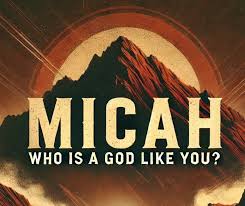
But Miriam not only danced. She also sang. And what she sang was a song giving glory to God for His goodness and forgiveness. The song is called Mi Chamocha…”Who is Like you” Proclaiming that only God is so merciful that He saved the Israelites in spite of their sin. Their drifting away from Him while in Egypt. Who is Like You indeed. For the Israelites, no one could match God’s mercy and forgiveness.
In today’s first reading, the Prophet Micah also proclaims to God, Who is Like You. In fact, Micah’s name itself has its root, Micah, from the phrase Mi Chamocha. And Micah implies that, in fact, no one is like God in the degree of mercy He shows that, in spite of how often Israel turns its back on the Lord, He is always ready to forgive them. He longs for the repentant sinner to return to Him. Where He waits with open arms. But does God really want to have the market on mercy cornered?
In the Gospel today we see the story of the Prodigal Son. And the highlight is when the Father runs with abandon, almost dancing as he goes, to embrace his wayward son who has returned to him. Flying in the face of custom. Which commands that he should force his son to approach him and ask for forgiveness. Make the son sweat a little. But playing it cool is not for this man. He cannot hold in the joy that he has for his son. Jesus in telling the parable has the Father giving God a run for His money in the mercy department.
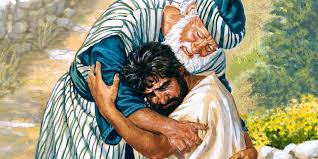
And this is the point of the story, is it not? That God is love and God is mercy. Not that He displays these attributes but He actually IS love and IS mercy. And Jesus tells us that is what we should strive for. Be perfect as your heavenly Father is perfect. Be Holy as He is holy. At least in terms of our ability to forgive. It was Jesus who told Peter to forgive 70 times 7 times. And we know He didn’t mean to limit it to 490 times. We have the capacity to forgive as God forgives. So Jesus’ answer to Micah’s question of Who is Like you? Turns out that answer is…US.
